Plant Cell Wall Degrading Enzymes - Plant Cell Wall Degrading Enzymes Of The Parasitic Plant Cuscuta As / The plant cell wall is a complex structure composed of different polymeric compounds.
byWilbert Phifer-
0
Plant Cell Wall Degrading Enzymes - Plant Cell Wall Degrading Enzymes Of The Parasitic Plant Cuscuta As / The plant cell wall is a complex structure composed of different polymeric compounds.. Now we study them for their utility in biomass conversion (see enzymes for bioenergy). Asperellum was tested on a range of cellulosic materials under various conditions. Although abundant, it is extremely difficult to degrade, as it is insoluble and is present as published: The insects use grouping of these enzymes to degrade. The cells of all plants are surrounded by a rigid network of carbohydrates called the cell wall (mcneil et al., 1984).
Asperellum and to identify enzymes important for the degradation of complex sugar. In addition, many of pcwdes are also utilized by biofuel and pulp industries. Fastidiosa and a pg from aspergillus niger, both expressed in escherichia coli, were flushed in pulses through healthy grapevine stems (fig. De vries r.p., benen j.a.e., de graaff l.h., visser j. It can be tough, flexible, and sometimes rigid.
Comparison Of Plant Cell Wall Degrading Enzymes Pcwdes Across Download Scientific Diagram from www.researchgate.net Pectinases for degrading the plant cell wall while. This was done partly to understand the plant cell wall degrading system of t. Cellulose, the main structural component of plant cell walls, is the most abundant carbohydrate polymer in nature. The pectin mediated cell wall. Asperellum and to identify enzymes important for the degradation of complex sugar. Among the family of enterobacteriaceae, two species of the genus erwinia define the soft rot group e. Therefore, the research team, led by dr. Now we study them for their utility in biomass conversion (see enzymes for bioenergy).
Asperellum was tested on a range of cellulosic materials under various conditions.
A cell wall is a structural layer surrounding some types of cells, just outside the cell membrane. The discovery and development of novel plant cell wall degrading enzymes is a key step towards more efficient depolymerization of polysaccharides to fermentable sugars for the production of liquid transportation biofuels and other bioproducts. Fastidiosa and a pg from aspergillus niger, both expressed in escherichia coli, were flushed in pulses through healthy grapevine stems (fig. De vries r.p., benen j.a.e., de graaff l.h., visser j. This was done partly to understand the plant cell wall degrading system of t. It provides the cell with both structural support and protection, and also acts as a filtering mechanism. The cells of all plants are surrounded by a rigid network of carbohydrates called the cell wall (mcneil et al., 1984). Although abundant, it is extremely difficult to degrade, as it is insoluble and is present as published: We have identified and characterized more than 15 cwdes and their corresponding genes in the. Studies using antibodies to cutinase (maiti and kolattukudy 1979) or pectate lyase (crawford and kolattukudy 1987) suggested that cell wall. Now we study them for their utility in biomass conversion (see enzymes for bioenergy). Therefore, the research team, led by dr. It can be tough, flexible, and sometimes rigid.
De vries r.p., benen j.a.e., de graaff l.h., visser j. Studies using antibodies to cutinase (maiti and kolattukudy 1979) or pectate lyase (crawford and kolattukudy 1987) suggested that cell wall. Now we study them for their utility in biomass conversion (see enzymes for bioenergy). Originally, we were interested in cell wall degrading enzymes (cwdes) for their role in plant pathogenesis. The discovery and development of novel plant cell wall degrading enzymes is a key step towards more efficient depolymerization of polysaccharides to fermentable sugars for the production of liquid transportation biofuels and other bioproducts.
Top Pdf Cell Wall Degrading Enzymes 1library from data01.123doks.com The complexity of plant cell wall degraded by the above mentioned enzymes so that it paves way for the cause of infection and disease to the plant. The pectin mediated cell wall. It can be tough, flexible, and sometimes rigid. Cell wall modification has also been implicated to play a role in parasitism in different lineages of parasitic plants. Originally, we were interested in cell wall degrading enzymes (cwdes) for their role in plant pathogenesis. Recent papers in plant cell wall degrading enzymes. The main characteristic of the soft rot bacteria is their ability to produce large quantities of plant cell wall degrading enzymes. Two pure, recombinant, hydrolytic enzymes, an egase from x.
Asperellum was tested on a range of cellulosic materials under various conditions.
De vries r.p., benen j.a.e., de graaff l.h., visser j. The main characteristic of the soft rot bacteria is their ability to produce large quantities of plant cell wall degrading enzymes. Therefore, the research team, led by dr. Cellulose, the main structural component of plant cell walls, is the most abundant carbohydrate polymer in nature. De vries et al., 2001. Identifying the major enzyme types involved in plant cell wall degradation is essential for gaining a better understanding of the cellulolytic capabilities of this organism as well as highlighting potential enzymes for application in improvement of livestock nutrition and for conversion of cellulosic biomass. Recent papers in plant cell wall degrading enzymes. Lignocellulose degrading enzymes (lignocellulases) lignocellulose is a tight complex formed by cellulose, hemicellulose, and lignin, and is the most abundant plant biomass on the planet. This was done partly to understand the plant cell wall degrading system of t. Cell wall modification has also been implicated to play a role in parasitism in different lineages of parasitic plants. Pectin methylesterase is one of the cell wall degrading enzymes, which acts on pectin, (a primary cell wall constituent) and releases methanol and hydrogen ions. Our results revealed the presence of pectinases in the larval midgut of r. Asperellum and to identify enzymes important for the degradation of complex sugar.
Recent papers in plant cell wall degrading enzymes. We have identified and characterized more than 15 cwdes and their corresponding genes in the. Pectinases for degrading the plant cell wall while. De vries et al., 2001. Asperellum was tested on a range of cellulosic materials under various conditions.
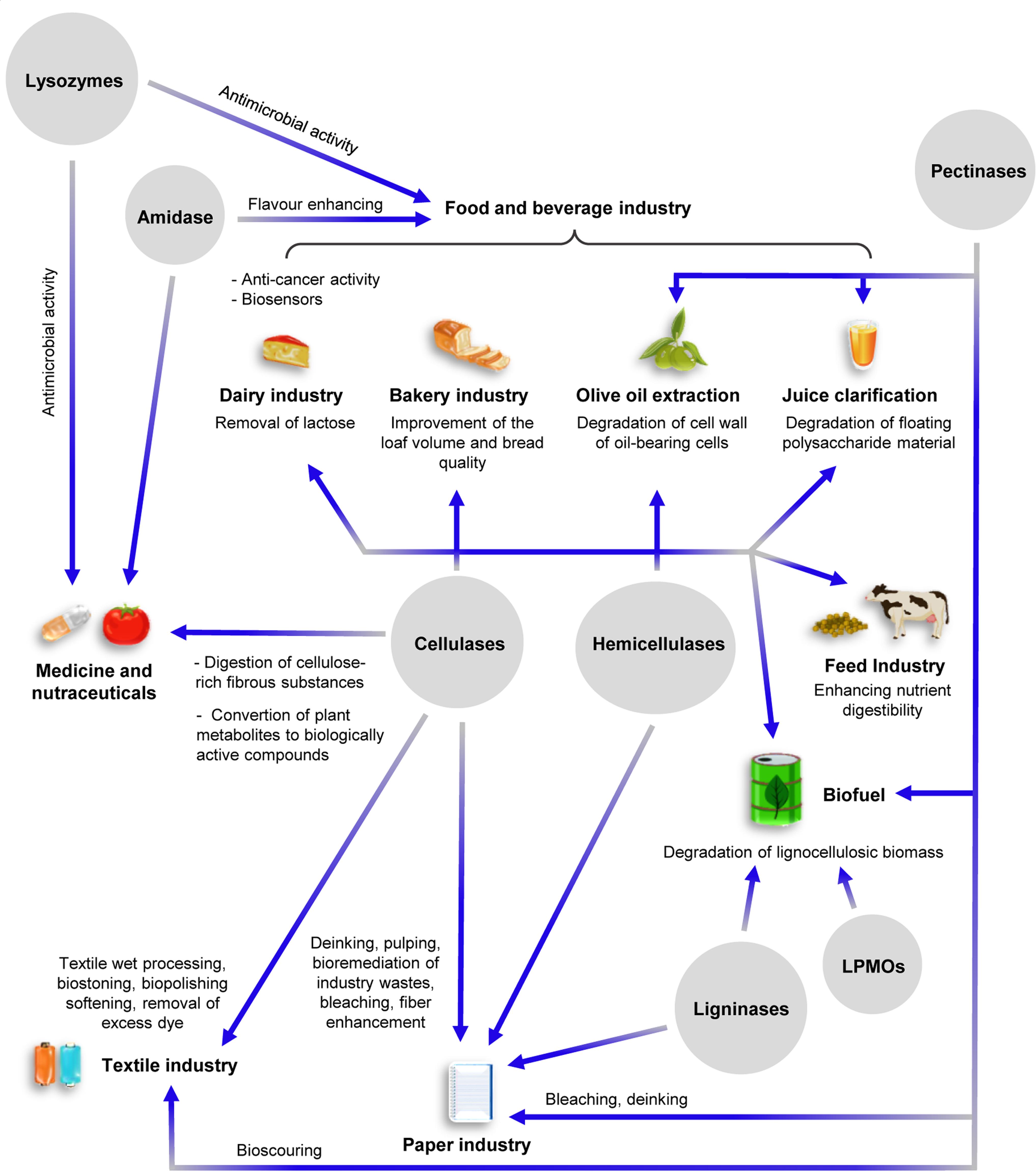
Frontiers Industrial Use Of Cell Wall Degrading Enzymes The Fine Line Between Production Strategy And Economic Feasibility Bioengineering And Biotechnology from www.frontiersin.org Cell wall modification has also been implicated to play a role in parasitism in different lineages of parasitic plants. When plant cell walls are damaged by mechanical or biochemical means, the cells initiate adaptive responses to repair the walls and prevent infection. Although abundant, it is extremely difficult to degrade, as it is insoluble and is present as published: Two pure, recombinant, hydrolytic enzymes, an egase from x. It provides the cell with both structural support and protection, and also acts as a filtering mechanism. Cellulose, the main structural component of plant cell walls, is the most abundant carbohydrate polymer in nature. Our results revealed the presence of pectinases in the larval midgut of r. In addition, many of pcwdes are also utilized by biofuel and pulp industries.
Fastidiosa and a pg from aspergillus niger, both expressed in escherichia coli, were flushed in pulses through healthy grapevine stems (fig.
We have identified and characterized more than 15 cwdes and their corresponding genes in the. The cells of all plants are surrounded by a rigid network of carbohydrates called the cell wall (mcneil et al., 1984). Lignocellulose degrading enzymes (lignocellulases) lignocellulose is a tight complex formed by cellulose, hemicellulose, and lignin, and is the most abundant plant biomass on the planet. Pectinases for degrading the plant cell wall while. Cellulose, the main structural component of plant cell walls, is the most abundant carbohydrate polymer in nature. The plant cell wall is a complex and heterogeneous structure composed of polysaccharides and phenolic compounds assembled in two distinct layers called primary these enzymes synergistically cooperate to degrade amorphous and crystalline regions of cellulose, respectively (figure 2a). Identifying the major enzyme types involved in plant cell wall degradation is essential for gaining a better understanding of the cellulolytic capabilities of this organism as well as highlighting potential enzymes for application in improvement of livestock nutrition and for conversion of cellulosic biomass. Two pure, recombinant, hydrolytic enzymes, an egase from x. Now we study them for their utility in biomass conversion (see enzymes for bioenergy). It can be tough, flexible, and sometimes rigid. Fastidiosa and a pg from aspergillus niger, both expressed in escherichia coli, were flushed in pulses through healthy grapevine stems (fig. (2002) plant cell wall degrading enzymes produced by aspergillus. Asperellum was tested on a range of cellulosic materials under various conditions.